
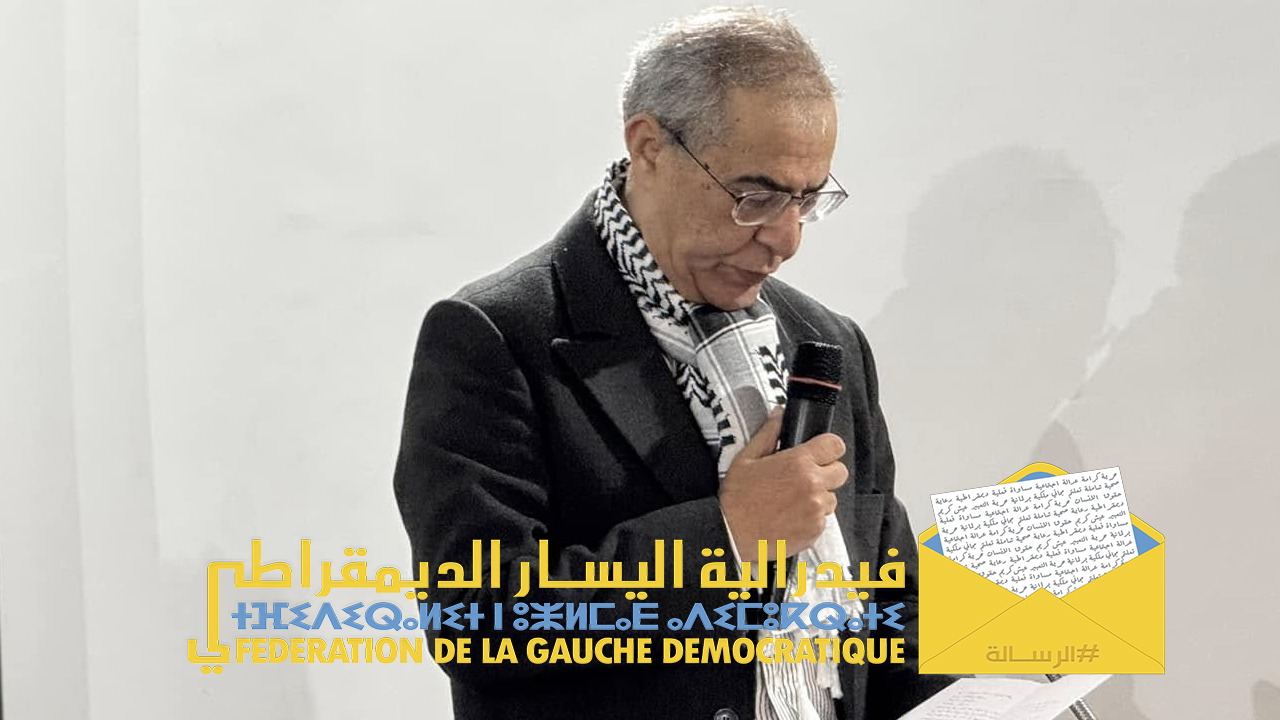
Floods in Ksar El-Kebir: Abdeslam Al Aziz Warns that "Displacement into the Unknown is No Solution" as the City Appeals for Relief
Abdeslam Al Aziz, Secretary-General of the Federation of the Democratic Left (FDL), issued a formal statement regarding the devastating floods currently affecting the city of Ksar El-Kebir. He warned of the severity of the situation and its humanitarian and social repercussions, describing the current moment as critical and fraught with unprecedented risks to the population.
Critique of Emergency Evacuation Procedures
Reflecting on his personal history as a native of the city who witnessed the historic floods of 1963 and 1971, Al Aziz asserted that the magnitude of today’s challenge transcends mere warnings or the assignment of blame. He emphasized the necessity of responsible and rational management, cautioning against "hasty and abrupt emergency measures" that mandate immediate evacuation without adequate preparation, as such actions exacerbate public panic.
The Secretary-General argued that demanding residents vacate their homes without providing a secure destination or guarantees regarding the safety of their property is unacceptable. He underscored that "displacement into the unknown" cannot constitute a viable solution, regardless of the severity of the circumstances.
Constitutional Obligations and State Responsibility
While Al Aziz acknowledged the positive efforts of various state institutions in preventing casualties and establishing temporary shelters, he maintained that these initiatives do not absolve the State of its sovereign duties.
He specifically cited Articles 21 and 31 of the Constitution, which stipulate that ensuring the safety of citizens and providing the conditions for a dignified life are fundamental constitutional obligations of public authorities. This is particularly urgent given that the disaster threatens approximately 125,000 citizens, many of whom live in conditions of precariousness.
Proposed Legal and Logistical Frameworks
Following the announcement of the total evacuation of the city, Al Aziz called for several urgent legal and logistical interventions:
Activation of Law No. 110.14: The immediate implementation of the legislative framework establishing a system for managing catastrophic events.
Declaration of a "Disaster Zone": Formally designating Ksar El-Kebir and its environs as a disaster area to mobilize necessary financial and logistical resources.
Utilization of Public Infrastructure: Opening all public and semi-public summer resorts in northern cities—currently closed—to house displaced families.
Private Sector Engagement: Partnering with the private sector to provide alternative spaces that uphold the dignity of the affected population.
Economic Impact and Social Protection
The Secretary-General drew attention to the dire economic consequences facing approximately 33,000 families. He noted that many workers, traders, and artisans will lose their livelihoods due to the prolonged suspension of economic activity.
He stressed that protecting lives begins with shelter but is only fulfilled by ensuring food security and a dignified income, arguing that "there is no room for improvisation" in the face of such heavy responsibility.
Al Aziz concluded his statement with a call for collective and responsible mobilization, placing human dignity and safety as the absolute priorities in confronting these natural tragedies.